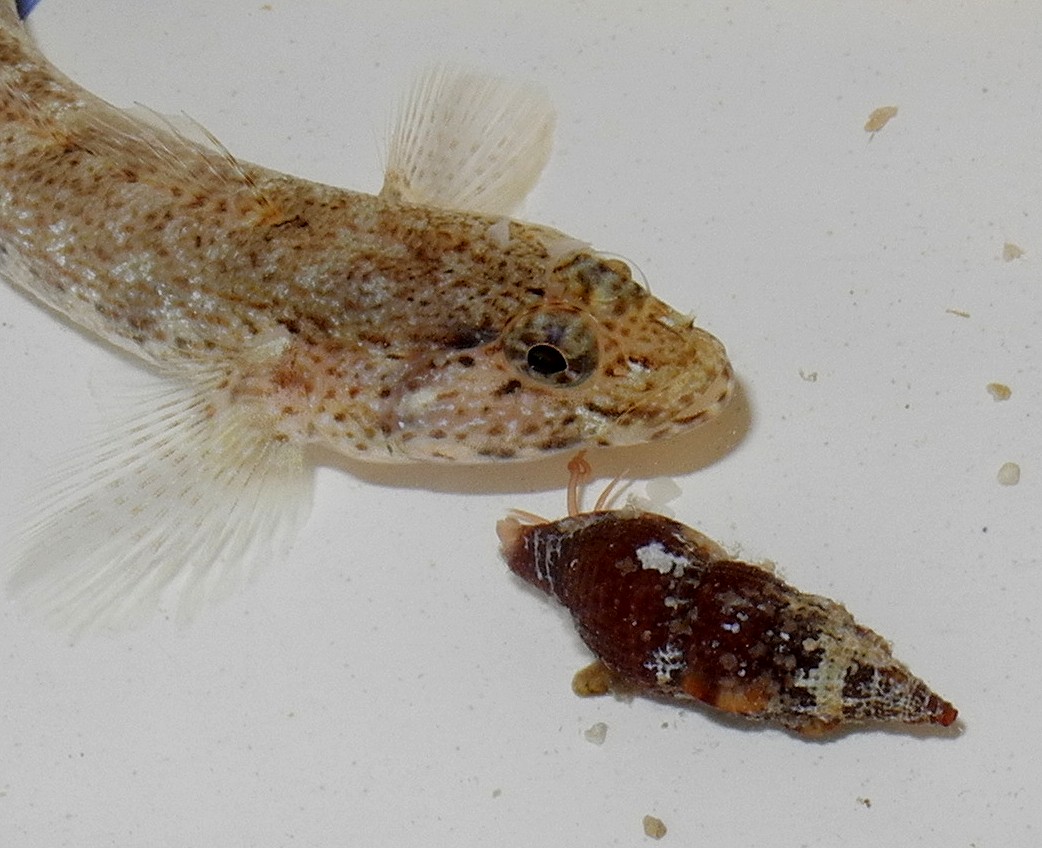
Mollusc of the Year 2026: the Mediterranean vampire snail, nominated by the Sapienza team, wins the competition
The Mediterranean vampire snail, Cumia intertexta, has been named Mollusc of the Year 2026.
The result of the competition, organised by the Senckenberg Research Institute and Natural History Museum in Frankfurt, in collaboration with Unitas Malacologica – the organisation that brings together mollusc researchers from around the world – was determined by a global citizen science initiative.
The vampire snail, which won the competition by beating four other species in the final round with 5,506 votes, had been put forward as the ‘Italian’ entry by a team of researchers from Sapienza University of Rome (Marco Oliverio), the Zoological Station (Maria Vittoria Modica) and the University of Salento (Giulia Furfaro and Michele Solca).
A population of this species, which inhabits the southern Mediterranean, was identified by researchers in the coastal waters off Porto Cesareo in Apulia. It is the only representative in our seas of the Colubrariidae family, which comprises around a hundred species, most of which are haematophagous, meaning they feed on the blood of fish.
These snails are mainly found in shallow waters in tropical and subtropical regions, hiding during the day under stones or in crevices in rocks and coral reefs, and becoming active at night. Their preferred prey appears to be parrotfish, due to the latter’s habit of returning to the same spot every night.
Although rare, vampirism has evolved independently on several occasions among gastropods, with blood-feeding species also found in the families Cancellariidae and Marginellidae. All these families belong to the same group, the Neogastropoda, characterised by a predatory lifestyle in which the prey is often paralysed through the production of toxins, as in the best-known species of the genus Conus, which are capable of injecting a neurotoxic venom by firing sharp darts.
Numerous toxins have also been identified in Cumia intertexta: proteins with a cytolytic action, i.e. capable of breaking down cell membranes and facilitating access to blood vessels; enzymes that increase the fish’s blood pressure and thus the ‘flow rate’ of the blood and the speed at which it is ingested; neurotoxins that anaesthetise the fish during the meal; and a series of anticoagulant and antiplatelet peptides that keep the blood fluid. Several of these bioactive molecules could be used to develop new drugs and are currently being studied in collaboration with doctors and pharmacologists.
The genome sequencing obtained as a prize for winning the competition is now proving to be extremely valuable: understanding the organisation of this species’ genome is essential for the advancement of research, as it can provide fundamental information on the genetic variability underlying the production of bioactive compounds.
This makes Cumia intertexta a model species for venomomics, the discipline that studies venoms and venomous systems in nature. It is a highly promising area of research for the discovery of bioactive compounds with potential applications in humans (bioprospecting).
As a matter of fact, the latter capitalises on the millions of years of optimisation brought about by natural selection, which have enabled venomous organisms to produce bioactive compounds that are extremely potent and highly specific to their molecular targets. Furthermore, fish possess highly efficient clotting mechanisms to compensate for the increased risk of bleeding in an aquatic environment, which makes research into marine haematophages particularly interesting.
“The team would like to extend its heartfelt thanks to the thousands of people – many of whom are from the wider Sapienza community,” says Marco Oliverio, “who, through their votes and interest, helped the vampire snail achieve this important recognition.”
Further Information
Marco Oliverio – Department of Biology and Biotechnology "Charles Darwin"
MOLLUSC OF THE YEAR 2026
The Mediterranean vampire snail, *Cumia intertexta*, is the Mollusc of the Year 2026
Genome sequencing is essential for understanding its evolution